
Preserving a historic Hull landmark for future generations as ‘newest’…
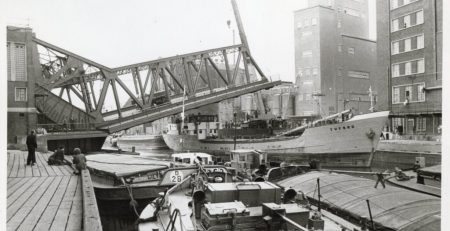
City saw its original Drypool Bridge installed in 1888 Drypool Bridge, a vital crossing over the River Hull, is undergoing a major repair and strengthening scheme, to preserve its heritage and ensure it remains safe and reliable for years to come. Located between Alfred Gelder Street and Clarence Street, Drypool Bridge provides a key transport route connecting east and west Hull. Situated in an area rich in history, the bridge has witnessed Hull’s transformation from a bustling maritime hub to a modern urban centre. As such, it represents not just an important piece of infrastructure, but Hull’s rich cultural identity. The current structure officially opened on Wednesday, July 5, 1961 and has since served motorists, cyclists, and pedestrians alike. It replaced the original Drypool Bridge, which had served the city for over 70 years. The earlier bridge opened on September 13, 1888, weighed 400 tonnes, and took 18 months to build. It was closed on May 19, 1959 and subsequently demolished to make way for the modern structure. The present bridge is a single-leaf bascule Scherzer rolling bridge – a moveable structure that uses a counterweight to continuously balance the span as it lifts to allow river traffic to pass. This design reflects mid-20th-century engineering. Weighing 1,436 tonnes, it took two years to construct. In 2017, Hull’s City of Culture year, the bridge was given a colourful facelift, inspired by the work of 19th century Hull-born mathematician and philosopher John Venn, the design enhancing the structure’s visual and cultural presence in the city. While the bridge we see today has undergone routine maintenance, it is currently receiving its most comprehensive overhaul since being constructed. Since the major repair and strengt…
SEE FULL ARTICLE